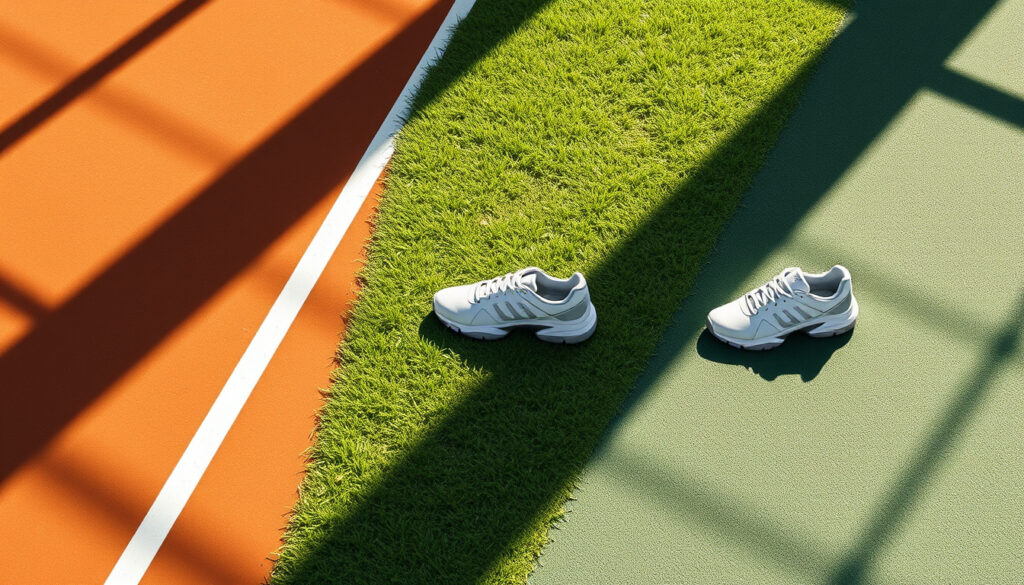
Tennis Shoes 2025 – Best Picks for Men, Women and All Courts
Choosing the right tennis shoe can feel overwhelming. With dozens of models from Nike, ASICS, Adidas, New Balance, and Babolat, players often wonder whether to prioritize brand, surface, or fit. The answer, based on current research, is that fit and court surface matter more than the logo on the side. This guide breaks down the best options for men and women in 2025, with a focus on all-court and clay surfaces, and includes specific advice for players with wide feet.
What are the best tennis shoes for men and women?
- Tennis shoes prioritise lateral support and court grip, unlike running shoes.
- ASICS and Nike dominate the performance segment; Adidas is strong for comfort and wider fits.
- All court shoes are versatile for most recreational players; clay court shoes have herringbone soles.
- Replace tennis shoes every 6–12 months or after 60–90 hours of play for injury prevention.
- Wide-fit options are available from New Balance, ASICS, and Babolat.
- Fit and playing style should guide your choice more than brand loyalty.
| Aspect | Key Fact |
|---|---|
| Best for lateral support | ASICS Gel-Resolution series |
| Best for cushioning | Adidas Ultraboost (lifestyle) or Adizero (performance) |
| Best for wide feet | New Balance Fresh Foam Lav or 996v5 |
| Best all court value | Nike Court Air Zoom Vapor Pro |
| Shoe lifespan | 6–12 months depending on play frequency |
Which brands offer the best tennis shoes?
Nike
Nike tennis shoes, especially the Vapor line, are known for a lightweight, speed-oriented feel. They often run narrow to medium, making them less ideal for wide feet. The Nike Vapor 12 is a top lightweight pick according to Tennis Warehouse.
ASICS
ASICS dominates the stability category. The Gel-Resolution series and Court FF 3 are consistently rated as top performers for all-around play. Standard widths tend to be snug, though wide versions exist – the Gel Resolution 9 Wide is a notable women’s option.
Adidas
Adidas Barricade models are generally roomier than Nike or ASICS, offering a more accommodating fit for broader feet. The Barricade 14 is highlighted for its lateral support and planted feel.
New Balance
New Balance is the most frequently recommended brand for wide feet. Models like the Fresh Foam X CT-Rally (2E) and the 806 are offered in multiple widths, and they combine comfort with stability.
Babolat
Babolat shoes often run narrow to medium. The SFX 4 is one of the roomier options in the lineup, making it a possible choice for players who prefer Babolat’s performance-oriented design but need a wider fit.
Women’s wide sizing is usually narrower in absolute terms than men’s wide sizing. A women’s D width can be the wide equivalent, while men often need 2E or 4E. Always check the width code before buying.
What are all court tennis shoes and how do they differ?
All court vs. clay court vs. hard court
All court shoes are designed to perform adequately on multiple surfaces. They feature a balanced tread pattern that provides grip on hard courts and reasonable traction on clay. Players who slide often on clay should consider a dedicated clay court shoe with a herringbone outsole, as noted by RunRepeat.
For hard court play, durability and lateral stability are key. The ASICS Gel Resolution line, adidas Barricade, and New Balance CT-Rally are strong choices. If you play mainly on clay, a clay-specific outsole is preferable, but for mixed-surface players, an all court shoe offers the best versatility.
Surface-specific buying advice
- Hard court: Look for durable outsoles and strong side support. Stability shoes like ASICS Gel Resolution and adidas Barricade are recommended.
- Clay court: Choose a clay-specific shoe if you slide frequently. If you need one shoe for everything, pick an all court model.
- All court: Best for recreational players who play on various surfaces. A balanced all court shoe combines traction, durability, and comfort.
The same shoe model may feel different across men’s and women’s versions due to last shape, cushioning layout, and upper volume. This is especially relevant for New Balance and ASICS wide options.
How to choose the right tennis shoes?
Fit first
A good tennis shoe should leave roughly 1–1.5 cm of space in front of the longest toe and not pinch the forefoot. If standard widths feel tight, look for wide or extra-wide models – New Balance and Adidas Barricade lines are good starting points.
Consider your playing style
- Aggressive movers / baseline grinders: Prioritise stability and durability.
- Fast movers / all-court players: Prefer lighter weight and responsiveness.
- Comfort-first players: Look for cushioning and roomy uppers.
Lifespan and replacement
Tennis shoes typically last 6–12 months or 60–90 hours of play. Replace them when the tread wears down or the cushioning flattens to avoid injury.
Tennis shoes vs. running shoes
Tennis shoes have reinforced sides for lateral movement, non-marking outsoles, and less heel cushioning compared to running shoes. They are not ideal for long walks because of their stiffer soles.
Where can I buy tennis shoes online?
Sports Direct, Tennisnuts, All Things Tennis, and the official brand websites (adidas UK, New Balance UK) all offer extensive selections. For specialist advice and a curated list of models, Tennis Warehouse’s buying guide is a frequently updated resource. For wide-fit options, Midwest Racquet Sports provides specific model recommendations.
Official brand sites often have the latest models and exclusive colourways, while multi-brand retailers can offer better prices and comparison shopping. RunRepeat aggregates user reviews and lab tests to help validate choices.
How have tennis shoes evolved over time?
- – First canvas and rubber shoes introduced for lawn tennis.
- – Adidas and Puma introduce specialised tennis footwear with herringbone soles.
- – Air cushioning (Nike Air) becomes popular; ASICS Gel technology launches.
- – Clay court-specific designs emerge; K-Swiss becomes dominant on tour.
- – Sustainability trends (recycled materials) and all court shoes become standard for recreational play.
What do we know and what remains unclear about tennis shoe selection?
| Established information | Information that remains unclear |
|---|---|
| Tennis shoes require lateral support and non-marking soles. | The single best shoe varies by foot shape and playing style. |
| ASICS, Nike, and Adidas are consistently top-rated brands. | Runner-to-tennis shoe conversion is not one-size-fits-all. |
| All court shoes work for most hard and clay surfaces (except specialised clay shoes). | Some players prefer lighter shoes over stability; personal feel matters. |
What is the broader context of tennis shoe technology and market trends?
Market trends point to a rise in all court shoes and eco-friendly materials. Cushioning technologies such as ASICS Gel, Nike Air, and Adidas Boost continue to evolve. Carbon fibre plates and breathable knitted uppers are becoming more common in premium models. Player endorsements – for example, Rafael Nadal with Nike and Novak Djokovic with ASICS – influence model popularity and drive year-on-year updates. For another look at performance gear, see Best Wireless Headphones – Top 2026 Expert Picks.
Where can I find reliable information and expert opinions?
For in-depth reviews, Tennis.com and Tennis Warehouse offer expert gear reviews and play-test feedback. The International Tennis Federation (ITF) provides official rules and surface classifications that can help players understand court requirements. YouTube channels such as this review also give visual comparisons of fit and durability.
Podiatrist recommendations on court footwear can be found through health-focused sportswear blogs, though no direct expert quotes were available for this guide.
What is the final verdict on choosing tennis shoes?
Fit and court surface are the two most critical factors. For players with wide feet, New Balance and Adidas offer the most consistent options. Nike and ASICS excel in performance and stability, but their standard widths may not suit everyone. Try on multiple models, consider your playing style and surface, and replace shoes every 6–12 months. For another buying guide see Little Black Dress – 2025 Guide to History, Style and Brands.
Frequently asked questions about tennis shoes
How long do tennis shoes last?
On average, 6–12 months or 60–90 hours of play. Replace when tread wears down or cushioning flattens.
Are tennis shoes good for walking?
Not ideal for long walks due to stiffer soles and lateral support design; walking shoes offer more forward flexibility.
Do tennis shoes come in wide sizes?
Yes, brands like New Balance, ASICS, and Babolat offer wide options. Look for models labeled ‘wide’ or ‘2E/4E’.
What is the difference between tennis shoes and running shoes?
Tennis shoes have reinforced sides for lateral movement, non-marking outsoles, and less heel cushioning compared to running shoes.
Which tennis shoes are best for wide feet?
New Balance Fresh Foam Lav, ASICS Gel-Resolution 9 in wide, and Babolat SFX3 are popular for wider feet.
Can I use all court shoes on clay?
Yes, but for regular sliding on clay, a clay-specific shoe with a herringbone pattern provides better grip and release.
What is the best tennis shoe for a beginner?
A mid-range all court shoe with good cushioning, such as the Nike Court Air Zoom Vapor Pro or adidas Defiant Speed 2, is a solid start.
More related posts
 Red Wine Ju – A Cla ic Recipe for Perfect Steak Sauce
 Travel Insurance Quote – How to Get the Best in 2025
 Lili Reinhart – Age, Height, Partner Jack Martin, and More
 Bob Marley Children – Complete List in Birth Order
 UFC Fighter 2025 – Current Rankings and Complete Roster
 Sydney Half Marathon – 2025 Dates Course Registration Guide
 Little Black Dress – 2025 Guide to History, Style and Brands
 How to Crochet – Step-by-Step Guide for Absolute Beginners